


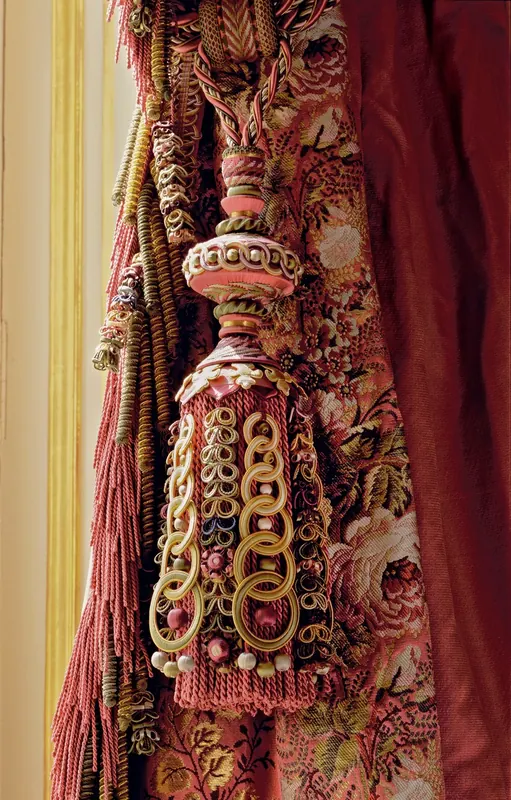
In the northeast of Paris, in a small village is an “atelier d’art” that makes the most exquisite textile decorative items: Declercq Passementiers.
The French word “passementerie” comes from “passement” and dates from the 12th century. The official dictionary of the Académie française defines it as: “A flat strip of fabric in which are interwoven threads of gold, silver, silk, wool, etc., and which serves as an ornament for garments, draperies”.
Today, there are only four “passementiers” remaining in France, and Declercq Passementiers is the oldest. It was created in 1852, and it is still owned by the Declercq family.
Jérôme Declercq, the current president, found, among old documents, a business card dated 1930 that belonged to his great-grandfather, Gaston Perret, that indicates: “Fabrique de passementeries pour ameublement fondée en 1643” (Manufacture of trimmings for furnishings created in 1643).
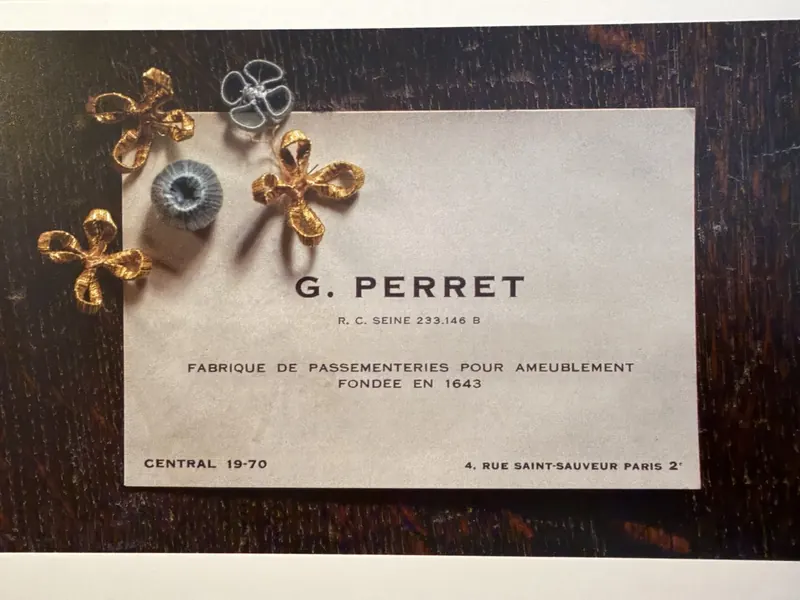
photographie Alexandre Réty : p. 35
The word “passementerie” is translated as “trimmings” in the English language. “Declercq Passementiers” still works according to ancestral techniques on very elaborate looms. The threads, which are purchased in Italy, are dyed, reeled and woven to produce tassels, fringes, tiebacks, acorns and many other decorative items to enhance curtains, draperies and textiles on furniture. There are 22 artisans working in the “atelier”. They are taught their skills on premises, and some of them have been there for decades. 80% of each item is handmade. Once the design is decided and the threads are prepared, it takes from 45 minutes to 350 hours to finish an item.
“Un fil d’histoires entre nos mains » (a story of the threads in our hands) is a two-minute film on YouTube, worth watching.
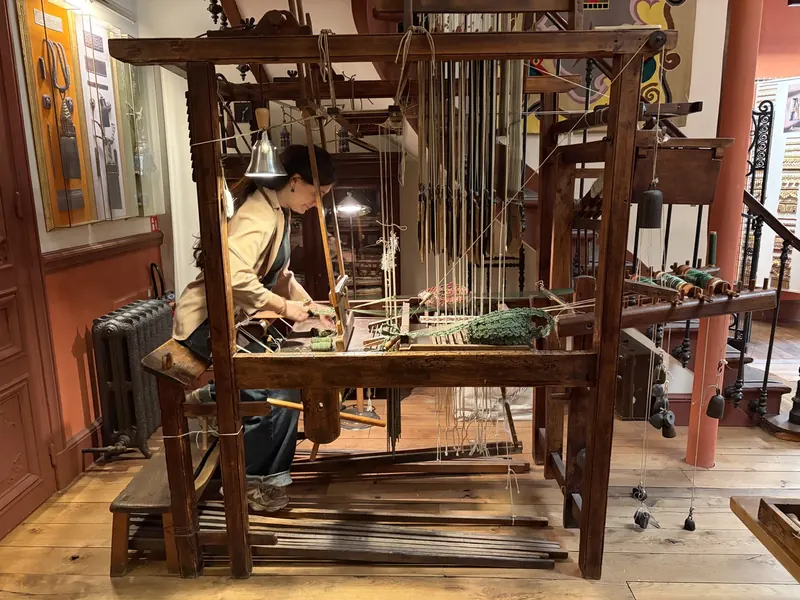
© MPD
Declercq does not always have drawings to follow, and so they rely on documents to reproduce 17th or 18th century pieces. This was the case for the ornaments to be included in the restitution of the Chambre du Roi in the Château de Versailles, which was just completed and opened to the public in April 2026. This restauration project was approved in the 1980’s with the objective to reconstitute the room’s décor in the typical style of the 18th century, as it was in 1789 when the Royal Family fled. The Château de Versailles called on the most skilled “artisans d’art de France”. It took Declercq Passementiers two full years to create and produce all the different kinds of trimmings, following a specific motif of the style of the 18th century.
Since April 2026, it has been possible to visit this magnificent renovation.
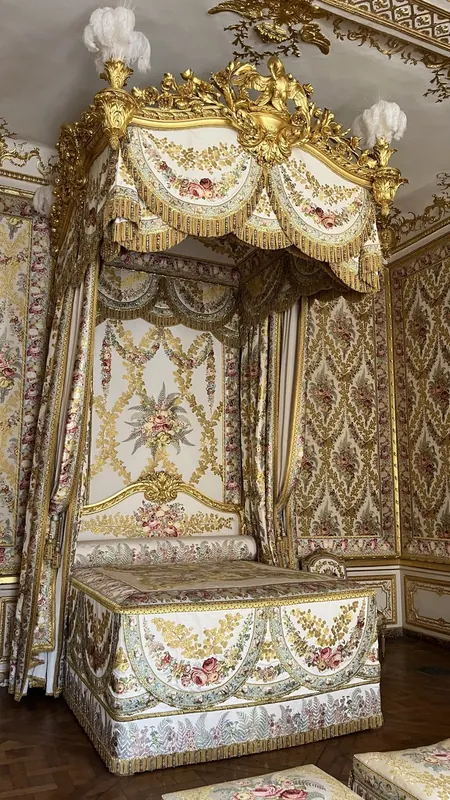
© Declercq Passementiers
In addition to the Chambre du Roi, Declercq worked on many other projects in the Château de Versailles. You can also admire their work in the Palais Garnier (the Paris Opéra), in the Château de Fontainebleau, in the Château de Vaux-le-Vicomte, in Chantilly, and in Paris, among many others public sites, at Hôtel de la Marine on the Place de la Concorde. The decorators Joseph Achkar & Michel Charrière of this latest project wrote: “Passementerie remains a major card in the decor, a small detail certainly, but you see it right away and you can almost only see that”.
In the United States, some projects carried out by Declercq are at the Frick Collection in New York, the Museum of Fine Arts in Boston, the Gettysburg National Military Museum, the Legion of Honor in San Francisco, and many more.
In Europe, they have received orders from the Schloss Schönbrunn in Vienna, Austria, and in the Middle East from private clients.
Declercq does not only produce classical items. Recently, a stool designed by the interior decorator, Edgar Jayet, was made with an aluminium base and the seat with their braided coverings.
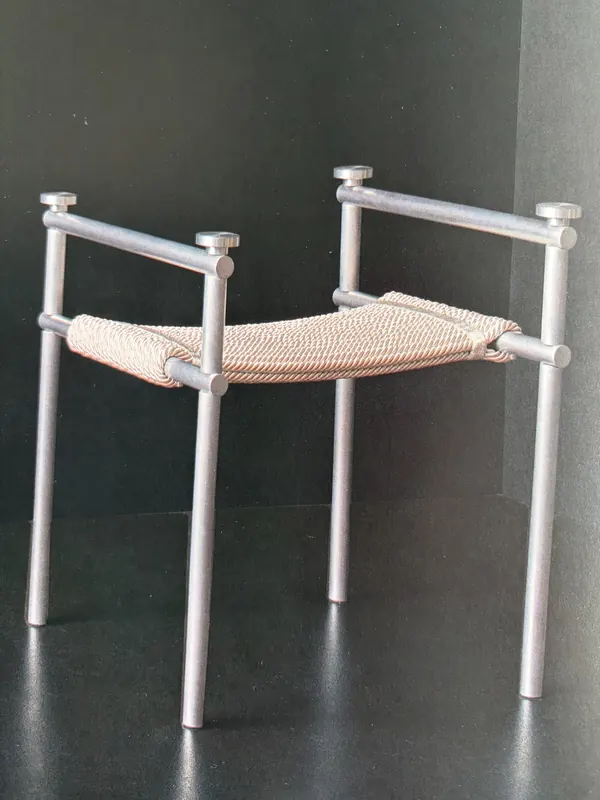
© photographie Alexandre Réty, p. 137
While visiting New York in the 1980’s, Jérôme Declercq, was inspired by the Chrysler Building and designed his first decorating item: a “gland” (acorn) in the shape of the Art Deco building. It comes in different colors and is a true piece of art.
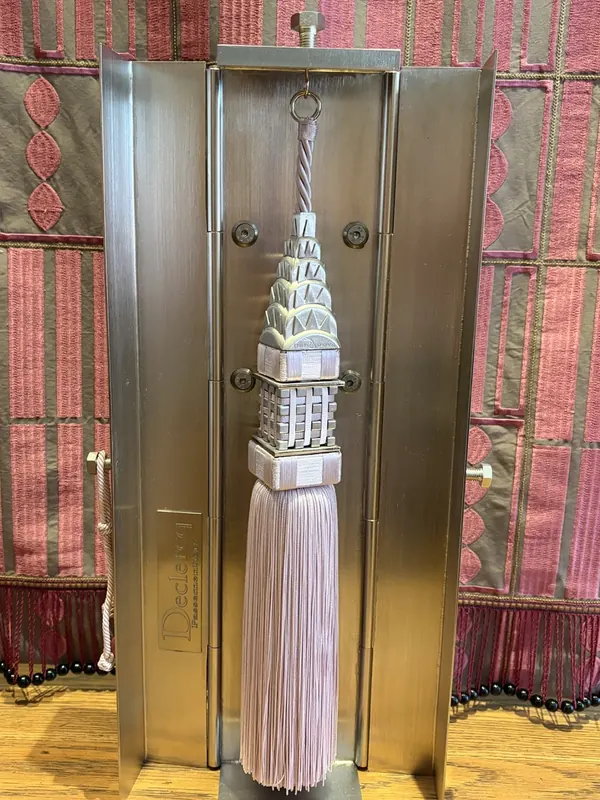
© MPD
To discover their products, one can visit their boutique located at 15 rue Étienne Marcel in the 1st Arrondissement in Paris. At the back of the boutique is the “Musée de la passementerie”. If you wish to have a guided tour, it is best to contact them. They will, very proudly, show you trimmings that date back from the 17th century onward and explain how they are made.
Lately, Declercq Passementiers was very much in the French news because they were facing financial problems due a slowdown in orders since Covid. Fortunately, many contributors, anxious to see such an exquisite heritage and skill remaining, came forward, and they raised over 120,000 €, enough to continue on, which we wish them for a long time ahead.

Comments