


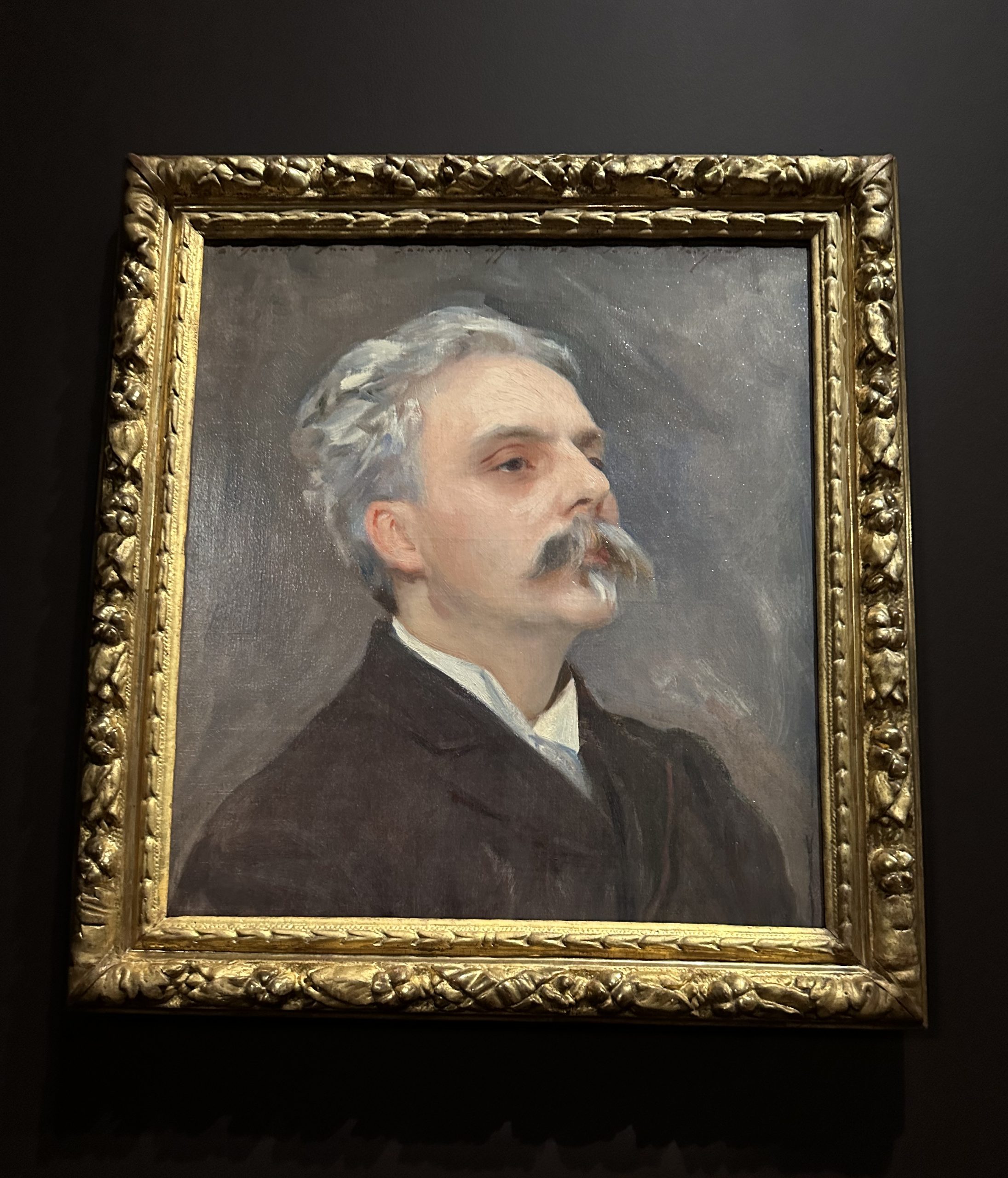
This fall, the Parisian art scene offers two very special exhibits. Let’s explore.
John Singer Sargent
The MET in New York held its major exhibit entitled “Sargent in Paris” from April 27 to August 3, 2025. As always, the museography was excellent. Of course, there were the very well-known paintings: Madame X (i.e., Virginie Gautreau), Docteur Pozzi at Home, the Daughters of Edward Darley Boit, just to name a very few. In addition, there were many paintings and drawings lent by private collectors that had not been shown before in public, and this made the exhibit most interesting.
From September 23, 2025, to January 11, 2026, the Musée d’Orsay will host the core of the same exhibit: John Singer Sargent, Éblouir Paris (Dazzling Paris).
John Singer Sargent was born in Florence, Italy, in 1856. His American-born parents, who obviously were well off, had decided to move to Europe. During his lifetime, Sargent lived in Italy, France, Spain, Switzerland, Germany and finally in England, where he died in 1925 at the age of 69. He took advantage of living in those countries to become fluent in their languages.
At a very early age, his mother noticed Sargent’s gift and his passion for drawing. So, when the family moved to Paris in 1874, Sargent attended the famous atelier created by Carolus-Duran, a prominent French portraitist. He studied there until 1878, and a year later, at the age of 23, he painted the famous portrait of his teacher. This was the beginning of a career as “the portraitist” of the “high” society and a very successful career.
The exhibit will show many of the paintings he made while living in Paris. It will be interesting to see if, in addition to the very famous portraits, other paintings and drawings owned by private collectors will also be presented in Paris.
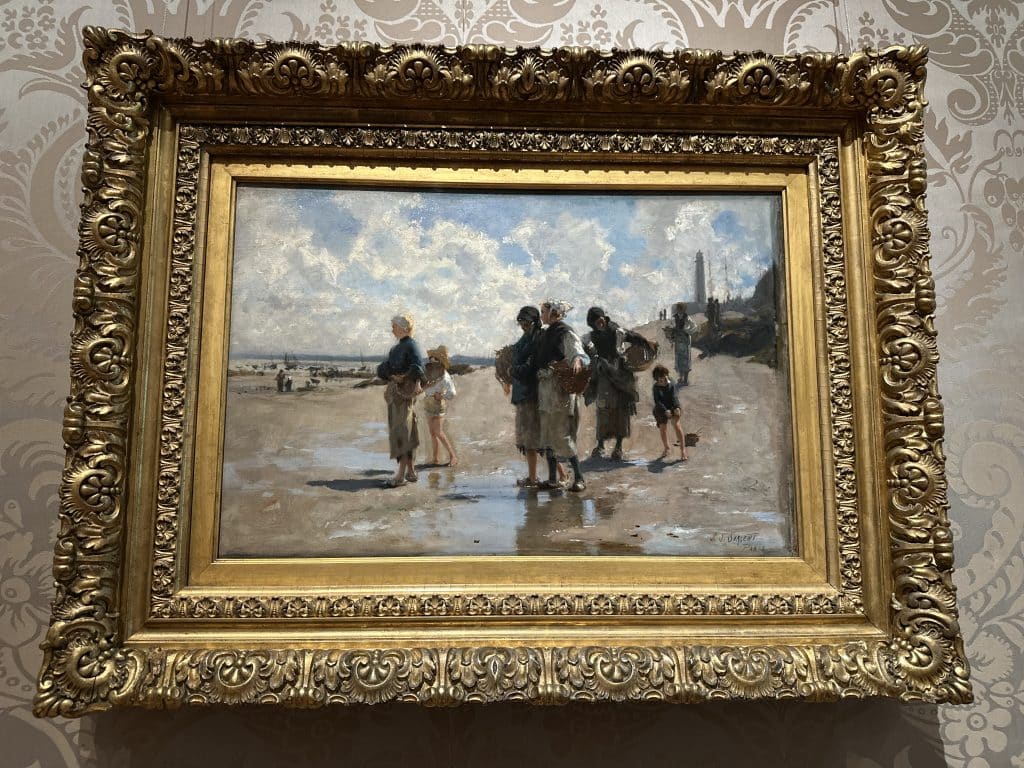
National Art Gallery, Washington D.C.
If Sargent is considered one of the major painters of the 19th century in England and the United States, he is not as well-known in France. Hopefully, this show will engender awareness and interest.
Georges de La Tour
From September 11, 2025, and until January 25, 2026, the Musée Jacquemart-André (Paris 8th arrondissement) is presenting a selection of works of “Georges de La Tour, entre ombre et lumière” (“between light and shade”). It will be the first retrospective in France of works by Georges de La Tour since 1997.
Georges de La Tour was born in 1593, in the then independent Duchy of Lorraine to the east of France. During his lifetime, he was a very successful artist, with orders from King Louis XIII, Cardinal Richelieu and many other wealthy collectors. But after his death in 1652, he “disappeared” from the art scene until he was “rediscovered” in the 20th century. Today, La Tour is considered one of the major French painters.
In 1638, during the Thirty Years’ War, between the Protestants and the Catholics, his house and his studio in the town of Lunéville (the Grand East Region) were burned down. According to art experts, only about 40 authentic paintings remain, many more having disappeared.
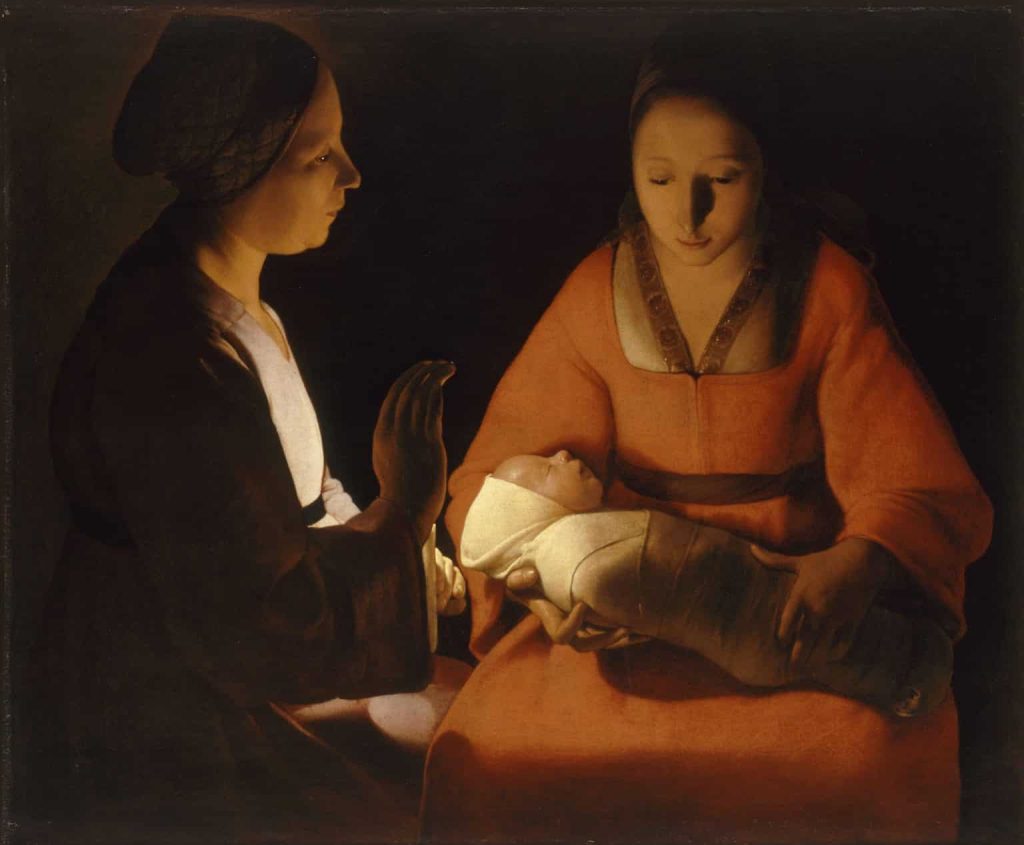
Musée des Beaux-Arts de Rennes
The subtitle of the exhibit is “entre ombre et lumière” (“between light and shade”). This is the focus of the exhibit, which presents 30 of his canvases as well as “copies after Georges de La Tour” gathered from major museums and from private collectors from around the world.
Georges de La Tour (1593-1652) and Caravaggio (1571-1610) both lived during the 17th century, but they never met. They had very different personalities, yet they shared two interests in painting: light and portraits of Saints. If La Tour is considered “the painter of the flame that reveals, transfigures and gives the most humble scene an obvious spiritual dimension,” as stated in the catalog of the exhibit, then Caravaggio was fascinated by natural light passing through windows. As for the portraits of Saints, Caravaggio presented them surrounded by others and in action. La Tour, on the other hand, represented them alone, in peaceful positions, praying or reading.
The exhibit highlights five major works by La Tour: (i) Le Nouveau-Né (the Newborn) ca. 1647-1648; (ii) La Madeleine pénitente (the Penitent Madeleine) ca. 1635-1640; (iii) Job raillé par sa femme (Job mocked by his wife) in the 1630’s; (iv) Les Larmes de saint Pierre (also called Saint Pierre repentant — the Tears of Saint Peter or the Repentant Saint Peter) 1645; and (v) Le Reniement de saint Pierre (the Denial of Saint Peter) 1650.
Georges de La Tour was Catholic, and it is obvious that the Bible was one of his profound interests, which he conveyed in the subjects of many of his paintings, some of which are hanging in the exhibit.
Published in August 2025 – Updated in November 2025