


« A Man and a Woman » (Un Homme et une Femme) – some of you may remember this wonderful movie from 1966 directed by Claude Lelouch and the famous scene when Jean-Louis Trintignant and Anouk Aimée, the actors, embrace each other on a beautiful long sandy beach. Well, the scene was filmed in Deauville.
Deauville is situated on the Normandy coast, south of the Seine river, about a two-and half-hour train or car ride from Paris. A small river, La Touques, separates Deauville from Trouville, which was a small fishing village created in the 18th century. (In Normandy, it is typical for the names of many villages and cities, regardless of their size, to end with the word “ville” which means “city.”)
Deauville was created in large part due to the Duc de Morny (1811-1865), who was a half-brother of Emperor Napoléon III (1808-1873). Their uncle was Emperor Napoléon I (1769-1821). The Duc was a successful entrepreneur, involved in the railroad business. He was an avid art collector and had a passion for horses. In 1864, he created the Hippodrome of La Touques in Deauville, which is still a major racetrack in France. Races, polo games and auctions of horses take place there.
The Duc de Morny made sure the railroad track went to Deauville. In that way, it became a very fashionable resort where wealthy Parisians started building elegant villas and vacation homes. Upscale hotels and casinos were created.
Then in 1870, the Franco-Prussian War took place. Two wealthy sisters, Adèle and Joséphine Mérigault, who had spent time during their youth with their parents in Trouville, decided to build an orphanage for the daughters of sailors lost at sea. They asked the Franciscaine nuns to run the orphanage, and it became known as the Saint-Joseph Orphanage of Deauville. If in 1880, there were 30 orphans, a year later, there were around 100. The orphanage provided not only a shelter for these little girls, but also schooling. At some point, up to 200 nuns worked at the orphanage which ended up rescuing all orphan girls from the age of 7.
When World War I started, the orphanage also became a military hospital for more than a thousand injured soldiers.
After the War, the orphanage became a school where girls, from the age of 7 to 14, learned “domestic” tasks. The nuns remained on the premises for 150 years until 2010, when they decided to sell the property, which had grown enormously thankful to donors.
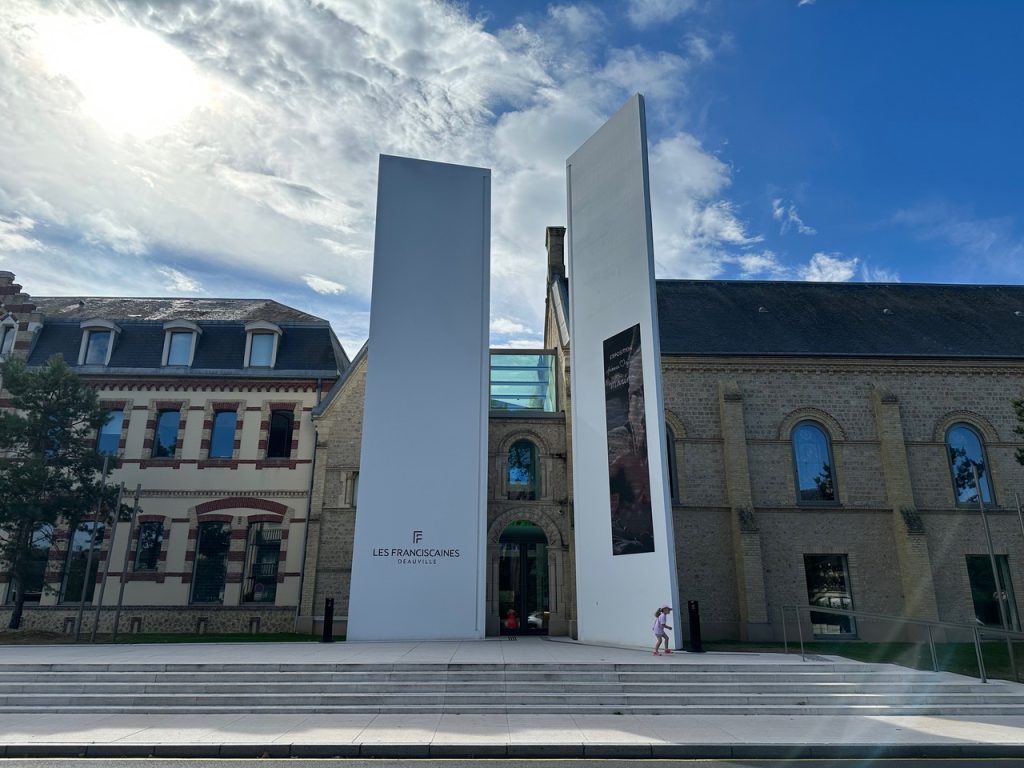
The City of Deauville bought the premises and decided to make it a cultural center. An architectural contest was launched, and the city received 180 submissions. The Moatti & Rivière Company was selected. Among many other projects, Moatti & Rivière also restored the Hôtel de la Marine on the Place de la Concorde in Paris.
After 25 months of renovation, the center was inaugurated in March 2021 with the name “Les Franciscaines”, and two months later it was opened to the public. It is very successful and within five years, more than 800 000 persons have visited this unique site. The City of Deauville wanted this space to be open to everyone, and no entrance fee is charged.
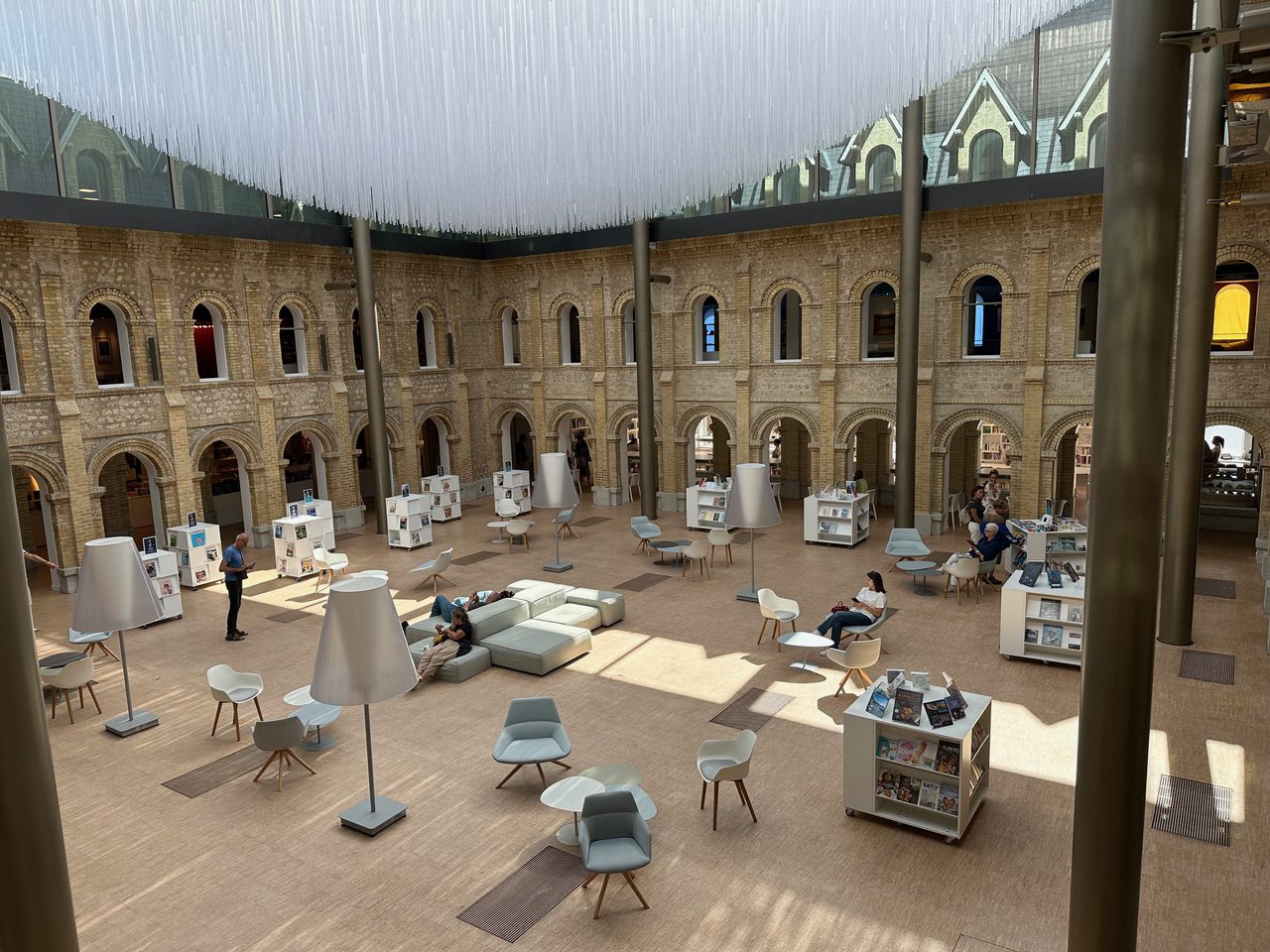
The center includes a library, a museum, a multimedia space, a photography gallery, a concert hall, a conference hall, and a restaurant. The restaurant called “Le Réfectoire” is located in the nuns’ former dining space. It consists of one long table to seat around 50 patrons. The walls around are filled with bookshelves.
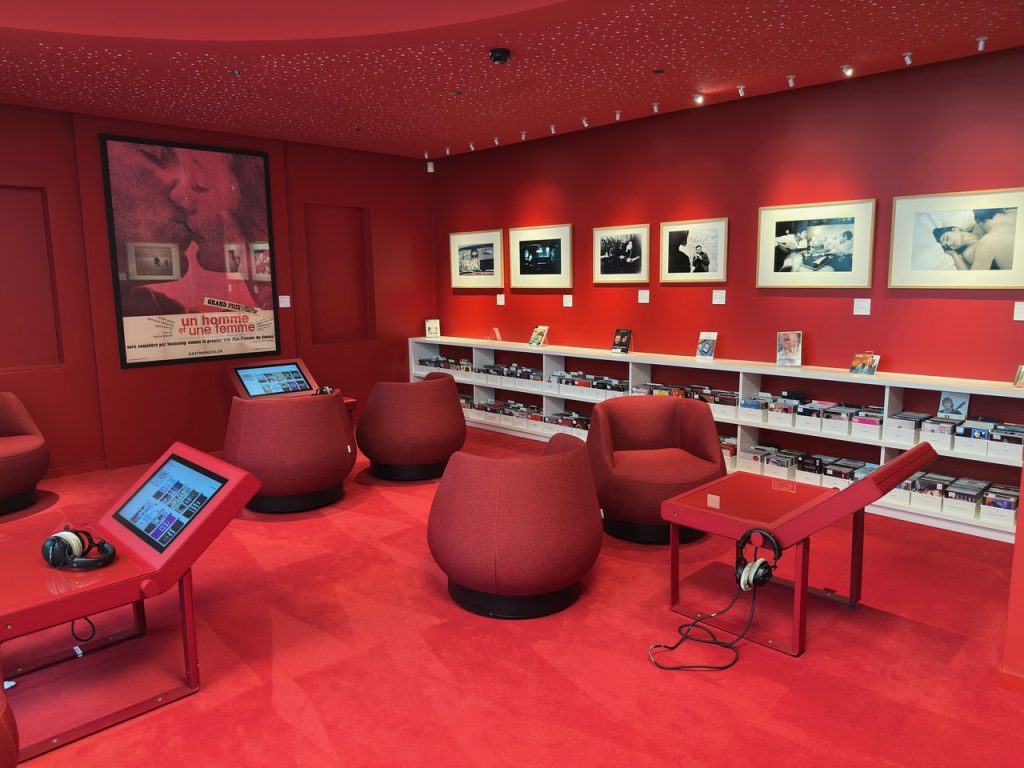
The space of the center is organized around five themes called “univers”: Deauville’s heritage, the arts (music, cinema, shows), the horse world, the art of living, and the young generation. They are not separated by doors but by what the architects call “rubans” (curving ribbons) filled with bookshelves, photos, paintings, all items relating to each univers.
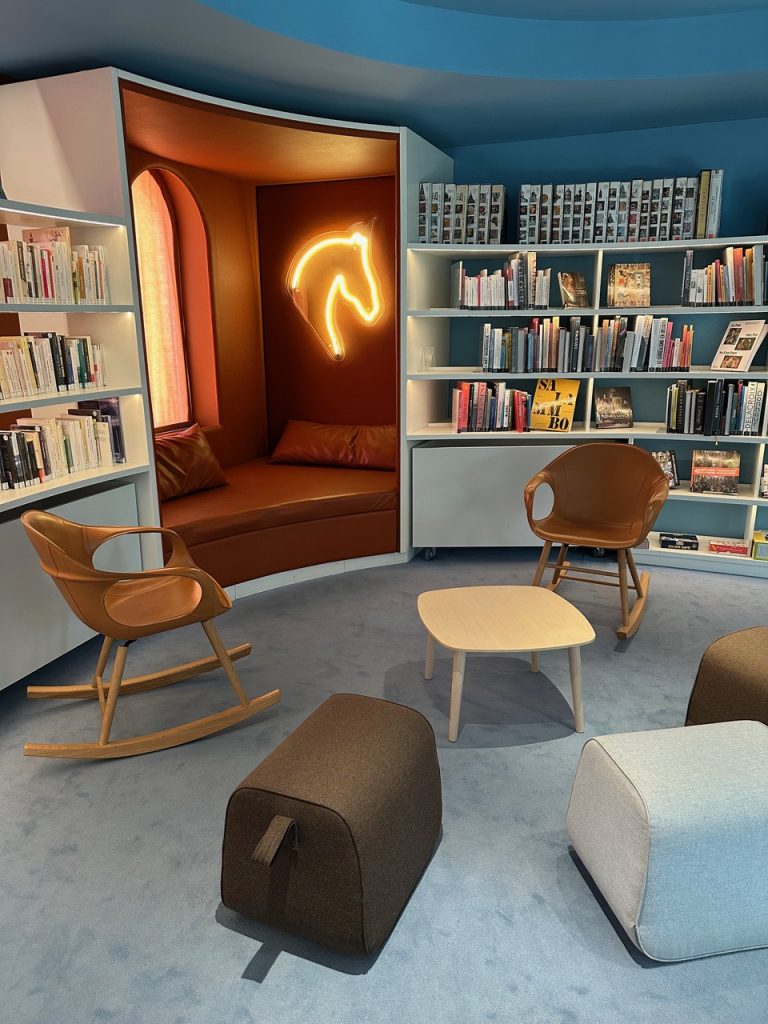
The library contains over 100 000 books and publications which visitors can read on the premises in very comfortable chairs or sofas, or they may borrow books if they become members of Les Franciscaines. Screens and computers are also available to everyone
The nuns’ Chapel is now an auditorium where 230 persons can either listen to concerts or attend conferences.
In 2011, Nicole Hambourg, the widow of the artist André Hambourg (1909-1999), gave their art collection to the City of Deauville. This collection is housed at Les Franciscaines and its space is called the Musée André Hambourg. In one section, the museum rotates different pieces by André Hambourg, and in the other section temporary exhibits of modern and contemporary artists are organized. From June 27, 2026, to September 20, 2026, the temporary exhibit will show paintings by the famous artist, Raoul Dufy (1909-1999), who was born in the nearby City of Le Havre.
L’univers jeunesse invites the young generation to be creative and organizes different workshops on art, reading and computer skills.
This rich cultural center is really inviting. It is very colorful, and each univers has a specific color (horses: brown, cinema: red). The floors are also covered with brightly colored carpets, and a calm atmosphere reigns, enabling readers to concentrate on their books.
In Deauville, every September another cultural event takes place: The Deauville American Film Festival. This festival, obviously devoted to American cinema, presents movies in “avant-première”. It was created in 1975, by the then mayor of Deauville, Michel d’Ornano, and Lucien Barrière, a prominent French businessman. Since 1999, the festival awards prizes. Numerous famous American actors, actresses and film producers attend this festival.
To this day, Deauville is still considered an upscale resort, with a very rich cultural life.
It is also surrounded by interesting cities such as Le Havre, Honfleur, Cabourg, and Caen. It is on the way to the 1944 Landing Beaches, the site of one of the most important events in the 247-year history of the French-American alliance and fruitful relations.
Published in November 2025