


During the last few months, the northern part of France, i.e. “au Nord de la Loire » (north of the Loire River, which is considered a weather frontier), has hardly seen the sunshine, — so let’s concentrate on a city that claims 300 days of sunshine a year: Aix-en-Provence.
This beautiful and very cultural city is located north of Marseilles, in the Provence region. Already the name makes you think of sunshine, lavender, bees, wines, art and much more. As of June 28, 2025, and until January 5, 2026, the city is celebrating its famous “son” and major artist, Paul Cezanne (1839–1906). The celebration is entitled “Cezanne at Home.” (Yes, his name is spelled without an accent on the first “e”). Many sites around town will be devoted to his life and his work.
The Musée Granet, which is the city museum, presenting art from Egyptian antiquities, French paintings from the 19th and 20th century to today’s French and Provençal creations, will have a major show of more than 100 works of art by Cezanne: oils, watercolors and drawings. In addition to the museum’s own collection, many of the pieces displayed will be lent by other French museums, as well as by museums from all over the world: United States, Canada, Switzerland, Japan and more. The exhibit will run until October 12.
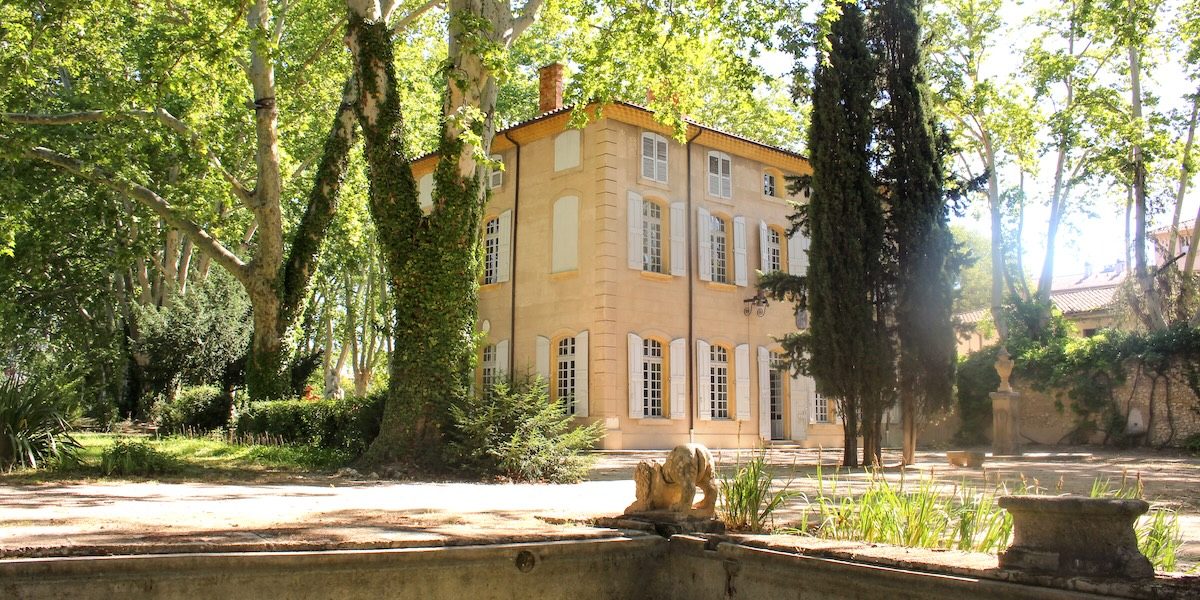
In 1859, Cezanne’s father, Louis-Auguste Cezanne (1798–1876), a banker, bought a Provençal estate, “La Bastide du Jas de Bouffan,” on the western outskirts of Aix, where Cezanne lived alternately for 40 years when he was not in Paris. The “Bastide” (a Provençal farmhouse) was surrounded by olive trees, vineyards and beautiful nature, which inspired Cezanne for many of his outdoor paintings. His father, who had hopelessly wished Paul would become a lawyer, built him a studio on the top floor of the mansion. This is where Cezanne created his most admired work, such as his many still life paintings of fruit. The farmers who worked at the “Jas” (a sheep pen) were also a source of inspiration — you may have seen the famous paintings of men playing cards.
To Cezanne’s great dismay, in 1889 following his father’s death, he and his sisters had to sell the Bastide. It was purchased by another family who owned it until the early 2000s, when it was then acquired by the city of Aix. During the renovation of the premises in 2023, hidden paintings done by Cezanne in 1859 were discovered on the walls in the “Grand Salon” (main living-room). They have been named “L’entrée de Port” (“the Harbor Entrance”). Other works that had been painted directly on the walls, but had been removed, will also be shown, such as “Les Quatre Saisons” (“The Four Seasons”).
After the sale of the Bastide, Cezanne designed a new studio for himself and had it built in 1901 on a hill, which is called “Les Lauves,” overlooking the city and the famous Montagne Sainte-Victoire, which he painted so often. After Cezanne’s death, it was purchased by a man known as “Marcel Provence.” In 1954, two Americans, John Rewald, an art historian and scholar of Impressionism, and the writer James Lord, created the Cezanne Memorial Committee. It raised enough money to purchase the Cezanne Studio, as it is now known, and to donate it to the University of Aix-Marseille; it is noteworthy that the fundraising and donation of the Cezanne Studio took place all within the same year. The Studio and its garden are today being restored to their original look and will be open to the public this June.
Another site of natural beauty where Cezanne found great inspiration for his work is further outside the city, Les Carrières de Bibémus (the Bibémus quarries). The calm and the beautiful colors of the stones are really reflected in his paintings.
One cannot speak of Cezanne without mentioning his great friend, the famous writer and journalist, Emile Zola (1840–1902). They met in 1852 at school, the College Bourbon, in the center of Aix. They both had lots of admiration for each other, and it was Zola who encouraged Cezanne to become an artist. Their relationship, not always peaceful, lasted until Zola’s death.
Hôtel de Caumont
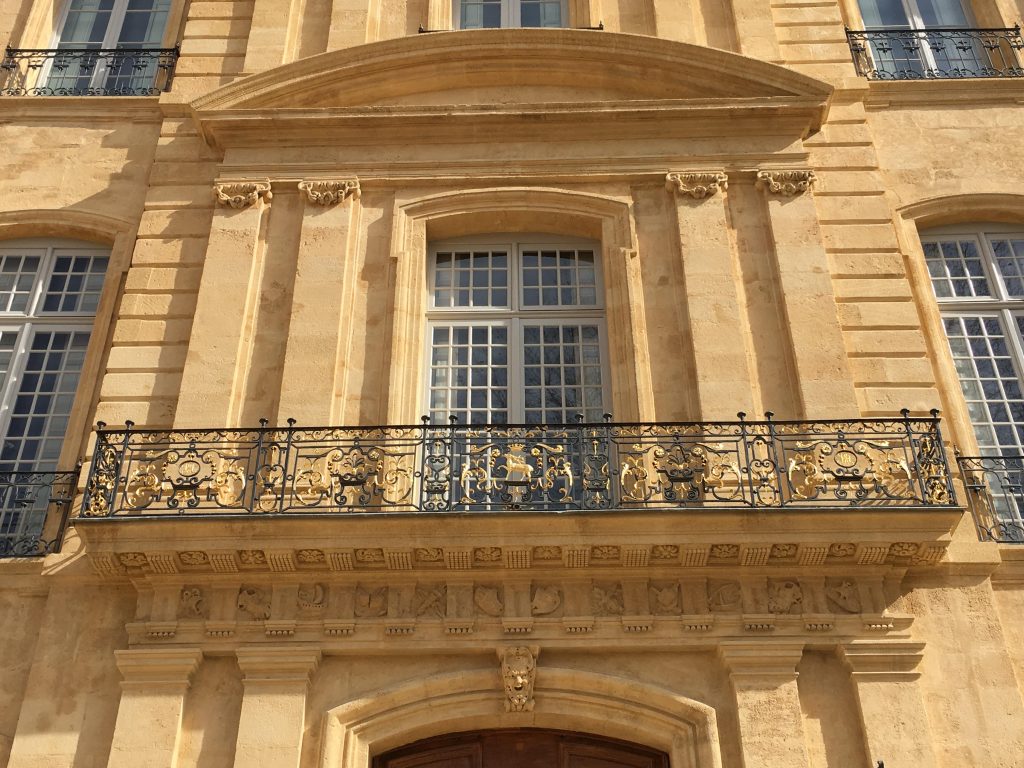
Walking in the center of Aix-en-Provence is a delight. You have many small streets surrounded by beautiful townhouses with ornate façades. Those streets lead to squares where you find antique fountains in their center. Water is precious especially in the summertime when it gets very warm, but at least dry.
The most exquisite mansion is L’Hôtel de Caumont, which was built between 1715 and 1742, in the Mazarin quarter of Aix. During the 18th century, noble families lived in this area of town. Its first owner was François Rolland de Réauville, a very wealthy merchant who asked the architect Robert de Cotte to create a townhouse in a Parisian style but not ignoring Provençal attributes. It is a most elegant building where lots of entertaining was held.
After many decades of disregard, a major restoration to create the atmosphere of the elegance of the 18th century took place. In 2015, the hotel was opened to the public and it is now the Caumont Art Center. No expense was spared, and thanks to original documents, some rooms have been recreated to look like the originals, furnished and decorated with 18th-century items. The music room, the Chinese salon, the Marquises’s bedroom are simply magnificent.
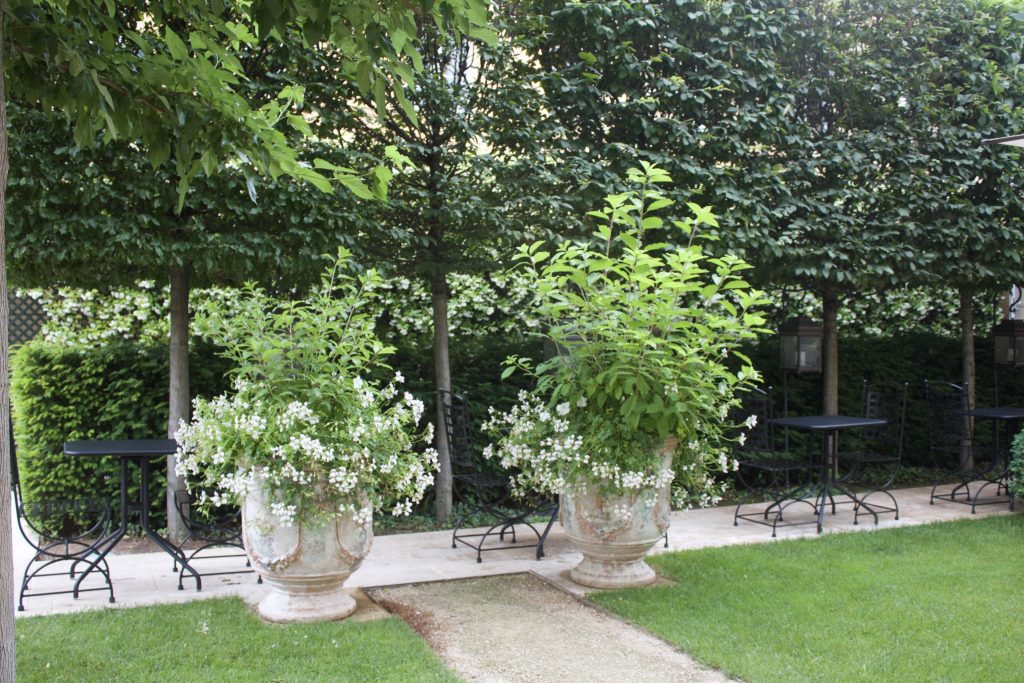
The Caumont art center also organizes two major contemporary art exhibits a year in other rooms of the mansion. Past exhibits have included the artists: Botero/Picasso, Nicolas de Staël, Bonnard and Turner. As of April 30, and to October 5, 2025, the exhibit has shown works of art done by the French American artist Niki de Saint-Phalle (1930–2002) who was a painter and a sculptor. The French Garden of the hotel is also beautiful, and it is possible to have a delicious lunch there and to enjoy the charm of the Provence.
Published in March 2025 – Updated in November 2025