


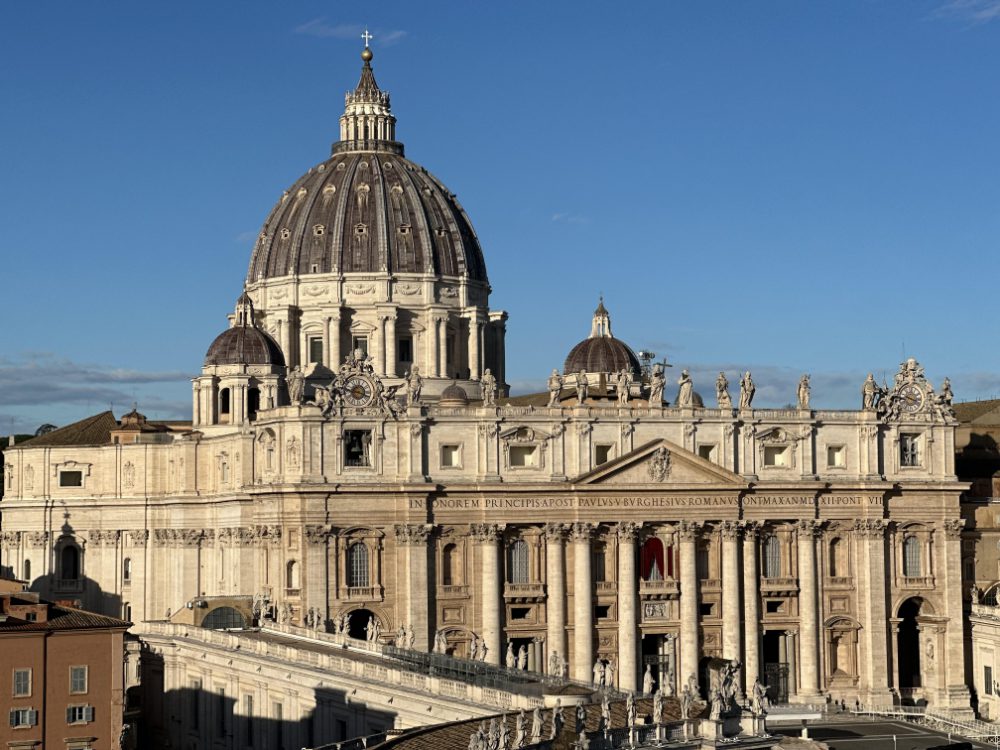
This past year was very important for the Vatican as it was celebrating a Golden Jubilee Year.
The tradition of the Jubilee celebration is mentioned in the Old Testament in Leviticus 25. Every fiftieth year, every Israelite was instructed to celebrate. The word “Jubilee” comes from the Hebrew word jobel, which is a ram’s horn blown to proclaim a yearlong period, when among other traditions, farmers had to leave their fields unattended so that the land would rest and recover. It was a year of joy.
But what does the Jubilee mean today and how is it celebrated?
“Pope Boniface VIII [1230-1303, Pope 1294-1303] proclaimed the first Christian Jubilee in the year 1300. The Christian Jubilee is a spiritual reinterpretation of the ancient Hebrew tradition. While the [Old Testament] Jubilee focused on freeing slaves, the Christian version offers liberation from sins, and from the punishment due to sin that must be faced in Purgatory” (Vatican News website).
Ever since, pilgrims from all over the world come to Rome, some by foot (even to this day) to pass the “Holy Door” which is considered the most powerful symbol of the Jubilee. Initially, the Holy Door of the Basilica of Saint John Lateran in Rome, which is the Cathedral of the Bishop of Rome, was the only one to be opened, but later due to the increasing number of pilgrims three other Holy Doors were opened and remained open until the end of the Jubilee year.
On Christmas Eve 2024, Pope Francis opened the Holy Door at San Pietro’s Basilica (Saint Peter’s Basilica), thus inaugurating the year of the Jubilee of Hope. That day, all the cathedrals in the world had to celebrate a mass to mark the event.
On December 29, 2024, Cardinal Baldassere Reina (Italian) opened the Holy Door of San Giovanni in Laterano (Saint John Lateran).
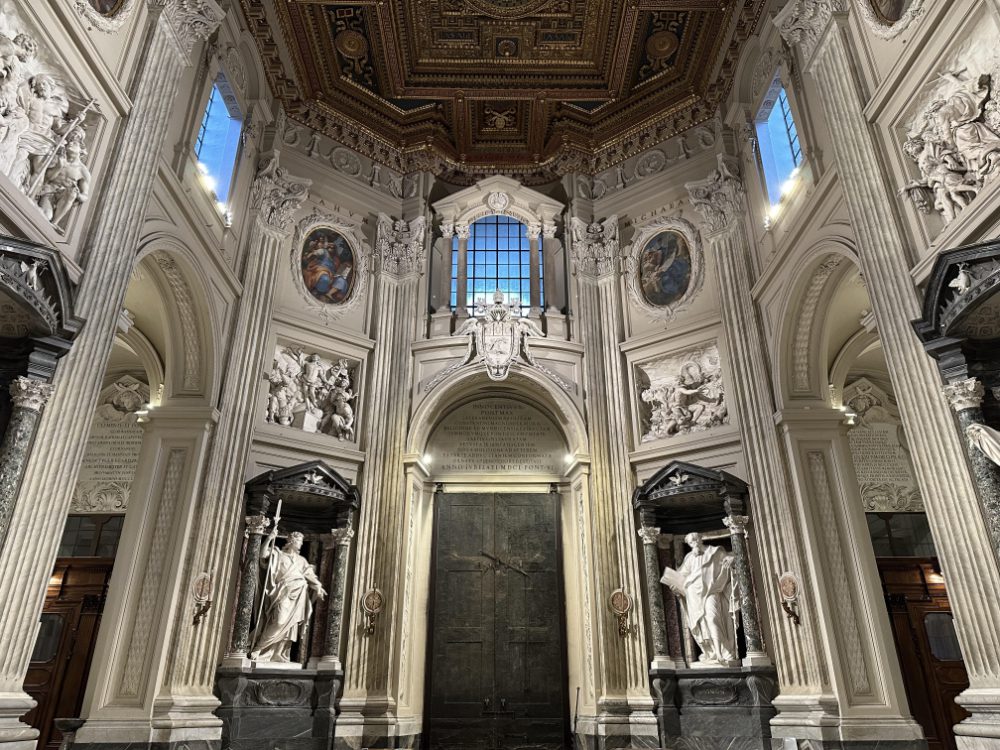
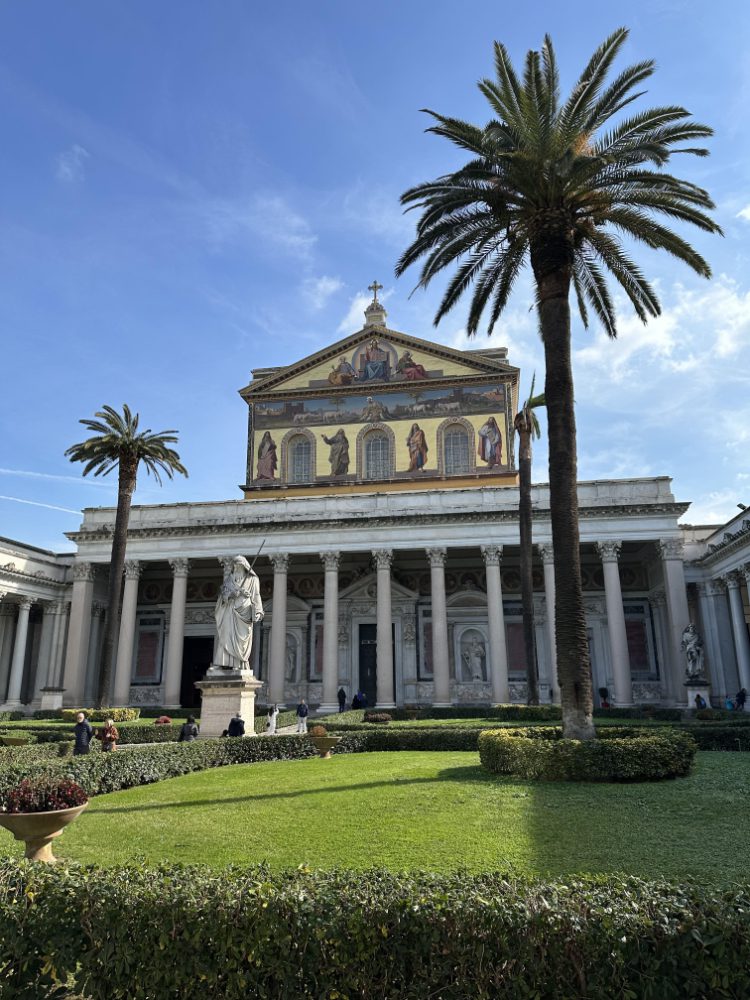
On January 1, 2025, Cardinal Rolandas Mackrickas (Lituanian) opened the Holy Door of Santa Maria Maggiore (Saint Mary Major), and four days later Cardinal James Michael Harvey (American) officiated the opening of the Holy Door of San Paolo Fuori le Mura (Saint Paul Outside the Walls). Those are considered the Papal Basilicas.
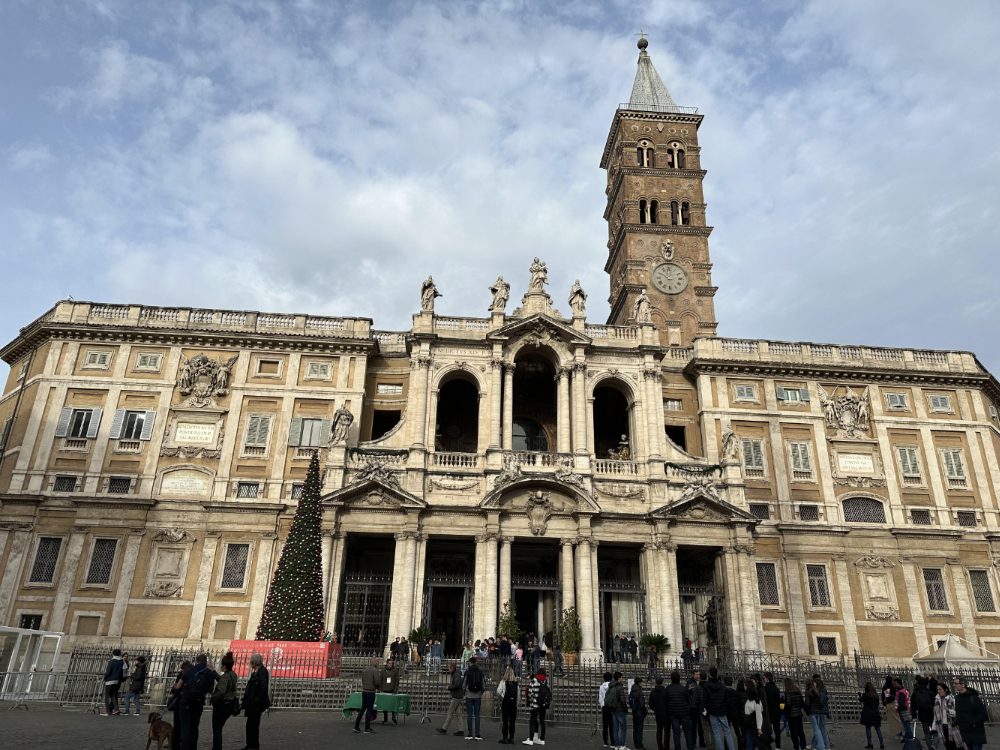
Pope Francis died on April 21, 2025, and he wanted to be buried at Santa Maria Maggiore, which was his favorite Basilica. On April 28, the Conclave started, where 180 Cardinals gathered in the Sixtine Chapel to elect the 267th Pope. For the first time ever, an American Pope was elected: Cardinal Robert Francis Prevost. In 2023, Pope Francis had made him the Prefect of the Dicastery for Bishops (Congregation for Bishops) in Rome, so that he was very well known in the Curia (the governing establishment of the Catholic Church). Prior to that, he lived many years in Peru, and so he has a strong international background and speaks many languages. At his election on May 8, 2025, he decided to be named Pope Leo XIV.
Pope Francis had organized the Jubilee, and Pope Leo XIV had to pick up the reins very fast.
During the twelve months, more than 33 million pilgrims came to Rome, (31 million was the target). After the Italians, the greatest number of pilgrims came from the United States.
Thirty-three different Jubilees were organized. Just to name a few, there were Jubilees for the World of Education, for the Prisoners, for the Choirs, for the elderly, for the tour guides, for the unwell persons, for the governments, for the missionaries, for the actors and for the artists….
The most “successful” one was the Jubilee of the Youth. One million young persons from all over the world came to Rome to attend their Jubilee which lasted from July 28 to August 3. They gathered, like all the other jubilees at Saint Peter’s Basilica where the Pope celebrated a mass outside on Saint Peter’s Square. They also had two important gatherings on major fields outside the Vatican (but in Rome) where the Pope came to meet them. Fortunately, the weather was very nice as many of them had to sleep outside. During the seven days, they attended many meetings and seminars and visited the important sites of Rome. They prepared questions for the Pope who answered in front of everyone. Both times, the Pope went very early in the morning to meet them and tour the grounds in the popemobile, and at the end of the meetings the Pope departed by helicopter and waved at them from on high.
The last Jubilee was the Jubilee for the volunteers. They were more than 7,000 volunteers who came from all over the world. Among them were 2,000 from the Order of Malta, who attended to medical issues. You could not miss the volunteers as they all wore bright green jackets with the Jubilee logo on the back. They were everywhere helping pilgrims and visitors.
On December 25, 2025, the Holy Door of Saint Mary Major was closed. On the 27th, it was the turn for Saint John Lateran, followed by the Holy Door of Saint Paul Outside the Walls. The Pope concluded the Jubilee of Hope on Epiphany Day, January 6, 2026, with the closing of Saint Peter’s Holy Door. Later on, during private ceremonies, the Holy Doors of the four Papal Basilicas were sealed.
It is obvious 2025 was very rich and exceptional. There were so many people everywhere in Rome.
Pope Leon XIV announced that the next Jubilee dedicated to the crucifixion and resurrection of Jesus will take place in 2033.
There is a Medieval Roman proverb, “Omnes viae Roma ducunt”. In 1175, Alain de Lille translated it into French: “Tous les chemins mènent à Rome,” and in 1391, Geoffrey Chaucer translated it into English: in 1391, “All roads lead to Rome.” Our Italian friends say: “Tutte le strade portano a Roma.”